Behind the Scenes · Old San Juan · 2011
The Rum Diary in Old San Juan: Bringing Hunter S. Thompson Back to Life
How the cobblestone streets of Puerto Rico's historic capital — and one iconic record store — helped recreate the gonzo world of 1950s San Juan.
Hunter S. Thompson set his semi-autobiographical novel The Rum Diary in Old San Juan for a reason. The city's layered history — Spanish colonial walls, sun-bleached plazas, streets that seem to hold onto every era they've witnessed — gave his story of moral drift and journalistic awakening a setting that felt both timeless and specific. When Hollywood finally brought that novel to the screen decades later, they came back to the same streets. And when they needed the objects that would make those streets feel like the 1950s, they came to us: Downtown Records, at the corner of Calle O'Donnell and Calle San Francisco.
▶ The Rum Diary — Official Trailer
The Book Behind the Film

Thompson's novel follows Paul Kemp, a young American journalist who arrives in San Juan to write for a struggling newspaper, and slowly loses himself to the island's beauty, corruption, and rum-soaked late nights. It's a story about finding a voice — and losing your bearings in the process. Thompson wrote it in his twenties, drawing directly from his own time spent in Puerto Rico, and the result is one of the most vivid portrayals of the island ever committed to the page.
What makes the book so cinematic — and so challenging to adapt — is how deeply its atmosphere depends on place. Old San Juan isn't just a backdrop in Thompson's telling; it's an active force, a character in its own right. The film had to honor that, which meant getting the physical world of 1950s San Juan exactly right: the furniture, the textures, the objects that would have populated those rooms and those lives half a century ago.
Thompson's Old San Juan isn't just a backdrop — it's an active force, a character in its own right. The film had to honor that, which meant getting the physical world exactly right.
Downtown Records as a Prop Supplier
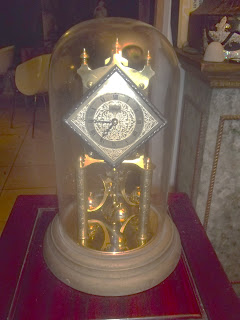
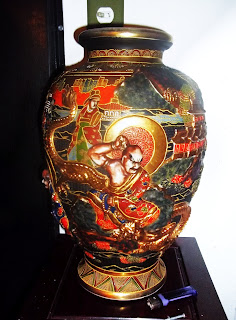
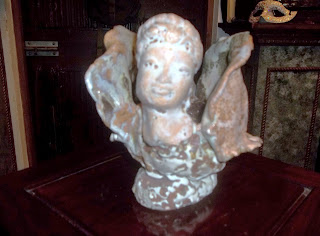
Our store became a primary source for the production team as they worked to dress the film's sets. The props department made multiple visits to our inventory at the corner of Calle O'Donnell and Calle San Francisco, sourcing furniture, decorative objects, and period-appropriate pieces that could convincingly inhabit Thompson's world.
For us, it was a natural fit. Downtown Records had spent decades accumulating objects with real history — pieces that had lived through the mid-century era the film was trying to recreate. Not reproductions, not new furniture artificially aged, but the genuine article. That authenticity is exactly what a production like The Rum Diary needed, and it's what we were able to provide.
▶ Scenes from The Rum Diary Featuring Old San Juan
Old San Juan: A City That Remembers
The filming drew visitors and curious locals in equal measure. Tourists wandered the cobblestone streets hoping to spot the production in action; residents opened their doors to cast and crew, sharing coffee and conversation in the unhurried way that Old San Juan has always welcomed strangers. There's something about this city — its scale, its density of history, its particular quality of light — that makes it extraordinarily hospitable to storytelling.
Old San Juan has stood in for other times and other places in film before. It doubled for Havana in Assassins; it gave Bad Boys 2 its textured Caribbean backdrops. But in The Rum Diary, it didn't have to pretend to be anywhere else. It was simply itself — and itself, it turned out, was more than enough.
▶ The Streets of Old San Juan on Screen
Thompson's Legacy, On Location
Beyond the production logistics, there was something meaningful about bringing Thompson's story back to the city that inspired it. The film became a kind of homecoming — not just for the novel, but for the gonzo spirit Thompson embodied throughout his career. His writing has always been about confronting the gap between how things are supposed to be and how they actually are, and Old San Juan, with all its beauty and contradictions, captures that tension better than almost anywhere.
▶ The World of The Rum Diary
▶ Hunter S. Thompson's Legacy in Film
When the final scene wrapped and the crew packed up, what remained was something quieter than the film itself: the memory of a collaboration between a great writer's world and the city that shaped it, filtered through the objects and streets and people of Old San Juan. For Downtown Records, it was yet another reminder that the things we collect and preserve — the furniture, the artifacts, the pieces of daily life from other eras — carry more meaning than they might appear to at first glance.
▶ Final Scenes: The Rum Diary in Old San Juan
Visit Frankie Vintage in Bayamón
Downtown Records has a new name and a new home, but the same deep inventory of objects that carry real history. Find us at Frankie Vintage in Bayamón — where Puerto Rico's cinematic legacy lives on.
Visit Frankie Vintage →